

Spain wine tour
Tour Rioja and Ribera del Duero, plus Burgos, Bilboa & beyond
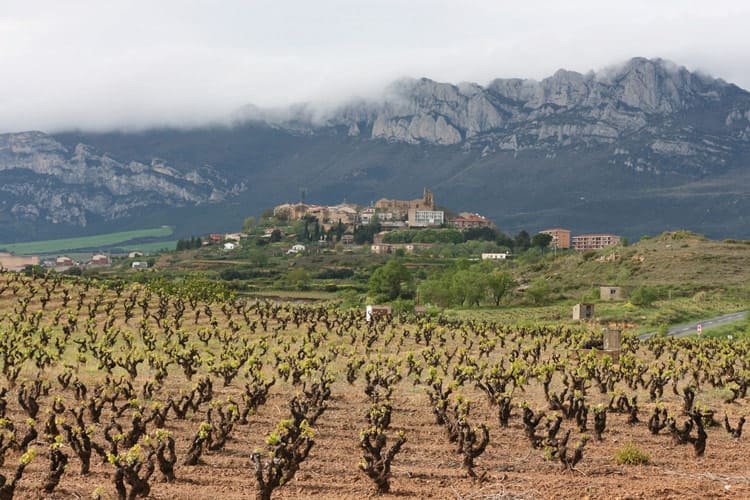
Tour two wine zones: Rioja, Spain’s most historic wine region, and Ribera del Duero
Private sit-down tastings at Faustino, Contino, Roda, Lopez Heredia, Pesquera & more
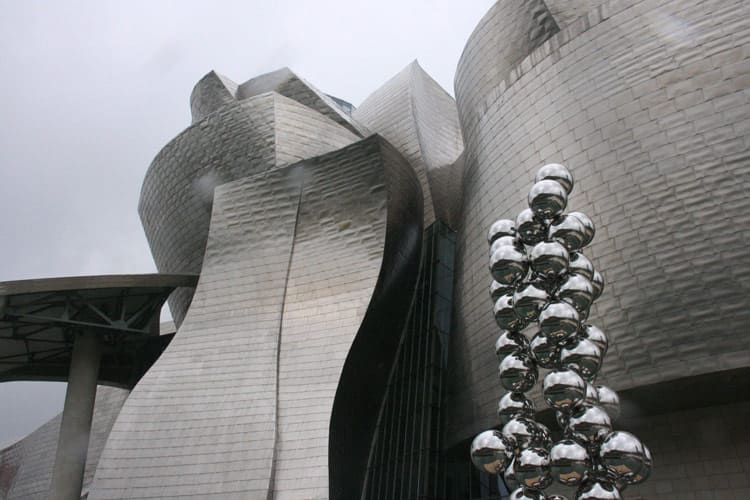
The Guggenheim Bilbao, the architectural wonder designed by Frank Gehry
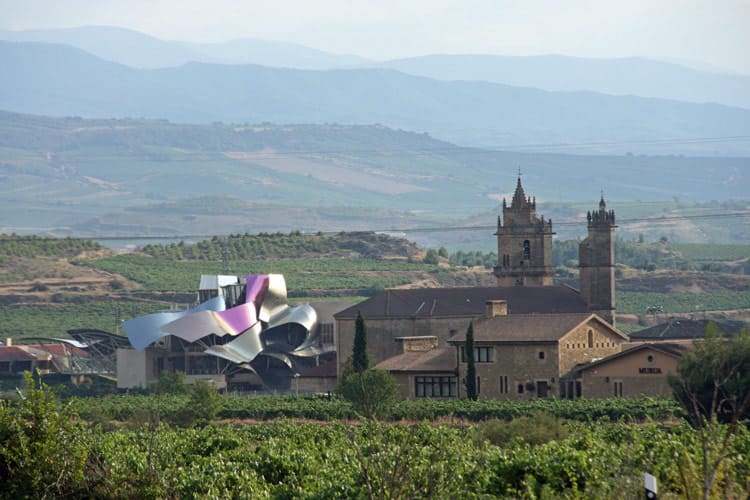
The Marques di Riscal, a historic Riojan winery, with hotel & spa also designed by Gehry
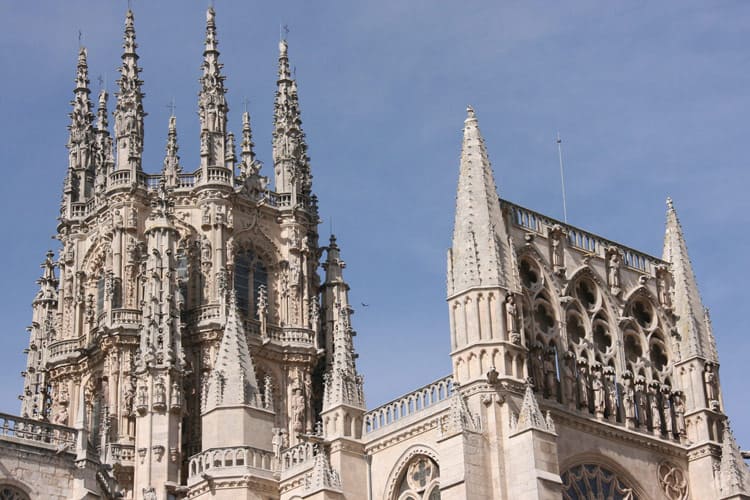
Burgos Cathedral, Spain’s third-largest cathedral and a UNESCO World Heritage Site
ITINERARY
DAY 1 – THE WINES OF RIBERA DEL DUERO
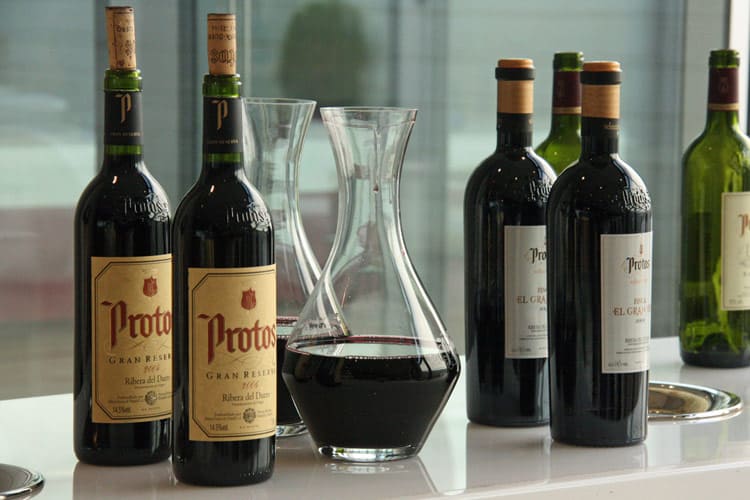
Ribera del Duero is hot! Not like southern Spain with 90+ temperatures, but rather with 90+ ratings. Granted DO status in 1982 when only 8 wineries existed, there are now 220 in this quality-minded region where tinto fino (tempranillo) reins.
From Valladolid, we head to our first winery, Abadia Retuerta. Being a stone’s throw beyond the DO border, these mavericks grow nontraditional varietals like syrah and petit verdot and emphasize single-vineyard cru in diverse microclimates. In contrast, during our second tasting—with lunch at Emina winery's restaurant—we'll focus on the regional star, tinto fino. (Emina also has an intriguing wine museum, which we'll pop into for a look.)
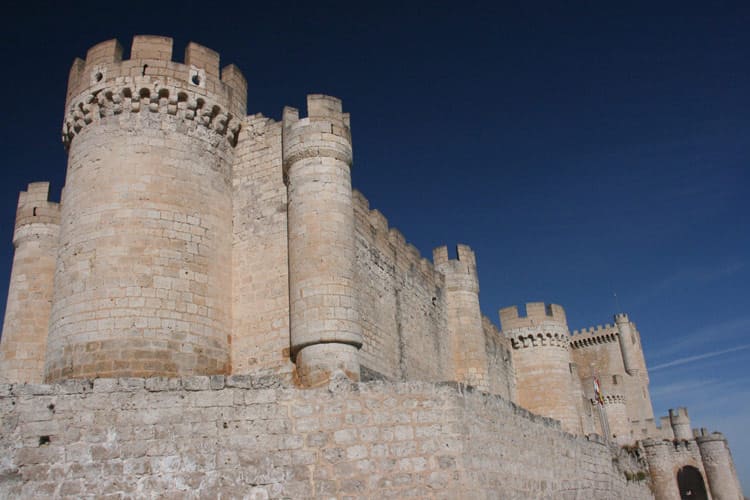
Our afternoon tasting again spotlights Ribera's tinto fino, at either Emilio Moro or Pesquera, both of which craft diverse styles from this malleable varietal. If time allows, we’ll visit the imposing castle of Peñafiel to take in the panoramic view of banks (ribera) of the Duero River. Dinner introduces upscale versions of classic Spanish dishes, such as pimientos rellenos (stuffed red peppers), white asparagus tips, artichokes with jamon (a special Iberian ham), and paella.
L, D • Convento las Claras in Peñafiel
DAY 2 – BURGOS CATHEDRAL + INTRO TO RIOJA
This morning we leave our Valladolid hotel and head to Rioja. But first we enjoy one final Ribera tasting: Contado de Haza. The owner, Alejandro Fernández, was one of the DO’s pioneers following a career in agricultural machines. After being lauded by Robert Parker, his Pesquera was the first Ribera sold in the U.S.
Then it’s on to Rioja, stopping en route in Burgos, a city with a beautiful historic center and one of Spain’s largest Gothic cathedrals, a UNESCO World Heritage site.
We continue to drive to Rioja and head straight to Miguel Merino. This boutique winery—the smallest in Rioja, by Miguel’s account—is in Briones, a charming village overlooking the Ebro River, whose past wealth is evident in the ornate sandstone cathedral. We’ll see Miguel’s retro tools for handcrafting modern wines, including vine canes for filtering and wet towels for temperature control, then taste his sensational Riojas. We then settle into our second hotel, a beautifully renovated convent in the town of Haro. Dinner is at the hotel’s excellent bistro.
B, D • Hotel Los Agustinos
DAY 3 – GUGGENHEIM BILBAO + HISTORIC RIOJA
Morning takes us to the city of Bilbao, about an hour north of Rioja on the Gulf of Biscay. Long a sleepy port town, it underwent a wholesale revitalization after the construction of the Frank Gehry–designed Guggenhem Museum. Here there’s time on your own for lunch, sightseeing, and museum-going. (Bilbao also has an excellent Fine Arts Museum with pieces by Goya, El Greco, Murillo, and other Spanish masters.)
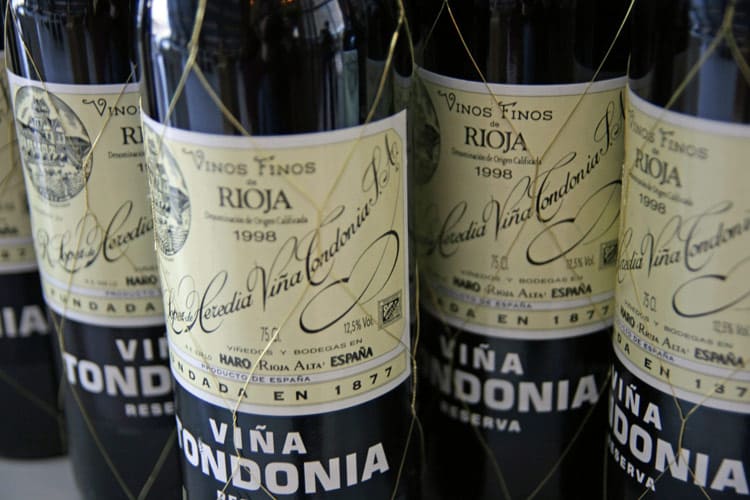
Mid-afternoon, we return to Haro to visit the Last of the Mohicans in Riojan winemaking, Lopez di Heredia. Prepare for a fascinating visit! Proponents of long-aged Riojas, this winery—the third oldest in Haro—doesn’t release its Gran Reserves until 20 years after harvest. We’ll patrol their 1890 cellar lined with 13,000 barrels, then sample this “historic” style of Rioja, which offers sherry-like oxidative notes and still has many fans. Dinner in Haro features classic pairing with Rioja, such as roast suckling pig or lamb.
B, L • Hotel Los Agostinos
DAY 4 – CLASSIC VS MODERN RIOJA
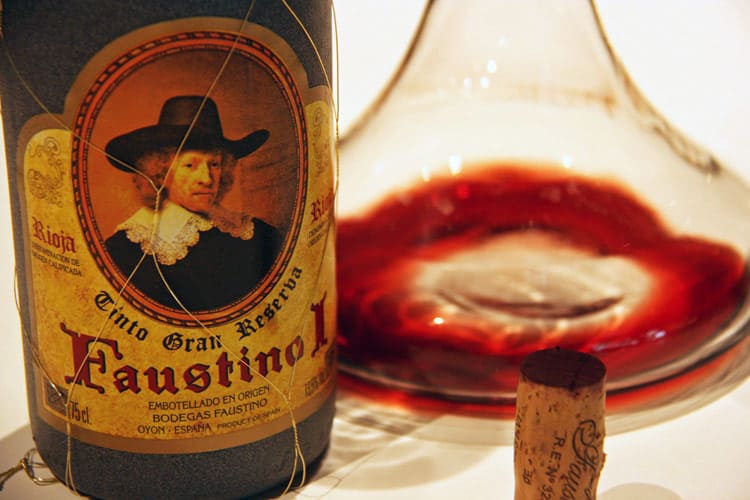
Another historic name in Rioja is Faustino, which also follows a traditional, long-aged approach to Rioja, while actively courting the younger generation. Despite its mega size (15 million bottles), it nonetheless makes delicious fresh white Viura and venerable Rioja blends that show hallmark notes of leather, vanilla, and balsam.
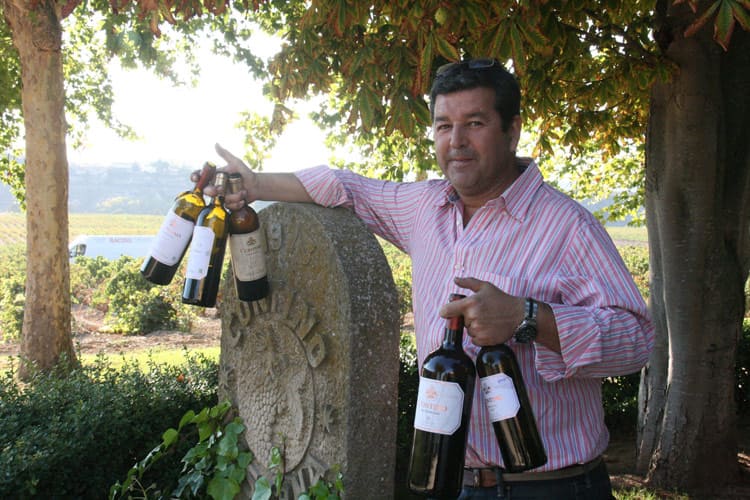
This behemoth contrasts sharply with our afternoon visit to Contino, a boutique winery that established the “chateaux” concept in Rioja in the 1970s—that is, a winery that grows all its own grapes on its adjoining property. Our host will be the winemaker and manager, Jesus de Madrazo Mater. Situated in a unique microclimate on a bend in the Ebro River, Contino is one of the few wineries that also makes a pure Graciano, normally a blending grape. After a stroll through the vineyards to see a Roman bridge on the Ebro river, we’ll taste their mouth-watering, modern wines. Dinner on your own.
B, D • Hotel Los Agustinos
DAY 5 – RIOJA’S ARCHITECTURAL WINERIES
Today we visit the Cathedral of Santo Domingo de la Calzada—the only one (surely!) to have a live chicken and rooster permanently on display. Here you’ll learn the legend behind this living relic, which ties into the history of this pilgrimage town, Santo Domingo de la Calzada, where bronze scallops in the sidewalks mark the way for the long-distance hikers and religious pilgrims on the Camino del Santiago. We’ll also stop by the Rio Oja, from which Rioja got its name.
After lunch, we visit the Marques de Riscal. Founded in 1862, the winery is key in the history of Rioja and was the first to bottle it for commercial sale. Today it’s just as famous for its modern architecture and luxury spa/hotel/winery complex designed by Frank Gehry.
After a tour and tasting, we head to the tiny town of Samaniego (pop. 400) to visit a member of the Spanish New Wave: Remirez de Ganuza. One of Rioja’s first grape grower–winemaker hyphenates, Ganuza continually experiments in the vineyard and cellar, blazing techniques for a new generation. Our day winds up with a farewell dinner at the hotel’s top-notch restaurant, where we’ll say salud to our new friends.
B, L, D • Hotel Los Agustinos
DAY 6 – HASTA LUEGO!
We depart immediately after breakfast to drive back to Madrid. Drop-off is at the Madrid airport by 1 P.M., which is connected to the city by subway. B
TRIP NOTES
Airport
Madrid Barajas, for arrival and departure
Pre-tour
Madrid offers endless possibilities for art and gastronomic adventures before or after our tour. For a basic orientation, see GoMadrid. Plan to land in Spain at least a day before the tour begins. We recommend spending the preceding night in Valladolid, our meeting spot. Valladolid is a lovely, historic university city and the regional capital of Castillo y León. In Valladolid, the most convenient hotel choice would be our pick-up location on Day 1, Meliá Recoletos. If you stay elsewhere, you will be responsible for arriving there in time for our pick-up, which is usually at 9:30. A second option is to take an early train from Madrid the morning of Day 1 (see below).
Getting from the airport to Madrid
In our experience, getting a taxi at the airport is preferable to scheduling a car service. Or you can use Madrid’s excellent subway system, the Metro. The airport terminals are the final stops on the 8 (pink) line. It takes about 30-40 minutes into the city center.
Getting from Madrid to Valladolid
Madrid and Valladolid are well connected by train. See the Spanish train (Renfe) schedule (in English). Search Madrid—>Valladolid Campo Grande. Be aware that Madrid has two train stations. For Valladolid, you’ll be leaving from the CHAMARTIN station, which is on the 1 (blue) Metro line. You can choose from over 20 trains from Madrid to Valladolid on a Sunday, more on weekdays. The fastest is the AVE, which takes only 56 minutes. It's not necessary to book in advance. The train station has ticket kiosks where you can get a last-minute ticket. Tip: Before leaving on your trip, print out the train schedule. This will come in handy when you're at the ticket kiosk picking which train to take, since the printout will include DURATION.
Meeting point
We meet in the lobby of Meliá Recoletos in Valladolid. The meeting time is usually 9:30 a.m. and will be confirmed in your information packet.
Departure day
On our final day, we’ll have you back to the Madrid Barajas airport between 1 and 2 p.m. (Drive time from Rioja is approximately 4 hours.) As described above, the airport terminals make up the final stops at the end of the 8 line (“Aeropuerto“). If you don’t fly out til evening, you can check your luggage in a short-term Baggage Deposit area and visit Madrid for a few hours.
Travel insurance
This is recommended to protect you from needless loss caused by last-minute cancellations, lost luggage, and more. Three sources are Travelex Insurance, (800) 228-9792; CSA Travel Protection, (800) 348-9505; and Travel Guard, (800) 826-1300.
Weather
When packing, check www.weather.com. Go to "Valladolid, Spain" and "Logroño, Spain" to get a general idea of temperatures and forecast.
For cancellation policy & more, see our General Information page.
2020 dates
Contact us to set up dates. Minimum size: 4
Price for custom tour
$3,795/person for group of 4
Inquire about price for groups of 6 or more.
Single supplement: $350
Add 3% commission if paying by credit card.
Price based on accompanying 6-day itinerary for 4 pax with double occupancy; discounts for larger groups. Modifications are possible, including the number of days, level of accommodations, amount of wine tastings, and inclusion of meals.
Optional: If you open your tour for others to join, you could potentially save money. We’ll quote a price for a guaranteed departure for your core group, then a lesser price if others sign up too. That tour will be added to our 2020 Calendar.
Meet
Valladolid (1 hr from Madrid by train)
Depart
Madrid airport
What's included
- 5 nights accommodations (double room) in three deluxe hotels, with breakfast buffet
- 4 gourmet dinners (three courses with wine)
- 1 welcome lunch
- All wine tastings mentioned
- Shuttle to Madrid airport at conclusion
What's not included
- Air travel
- 1 dinner on your own & most lunches
- Optional entry to Guggenheim museum and Burgos cathedral
- After-dinner drinks, or special wines at tastings that are not part of what is provided to the group
- Items of a personal nature
- Anything not specified as included
“Great job showing us a wide range of wineries, both small and large. We really liked the diversity and particularly the smaller wineries, and were very impressed with the quality of Rioja and Ribera wines.”
“Great trip! Loved receiving the list of everything we drank during the tour. Enjoyed ourselves immensely.”
